
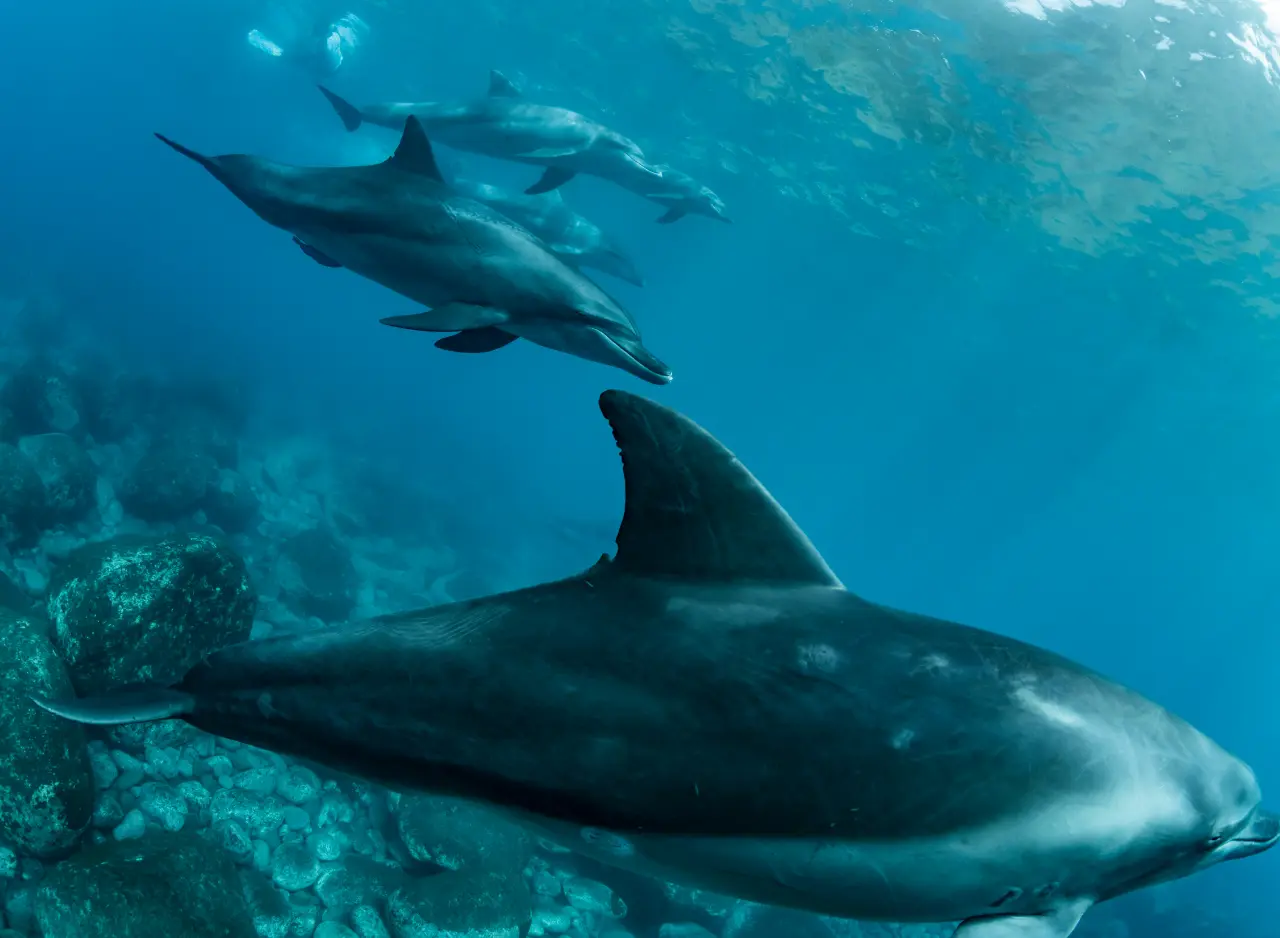
Imagine gliding through crystal-clear turquoise waters as the sun rises over the Indian Ocean, when suddenly a pod of wild dolphins appears beside you. They leap, glide, and swim effortlessly through the water — curious, playful, and completely free. This is the magic of swimming with dolphins in Zanzibar, one of East Africa’s most unforgettable marine experiences.
Zanzibar is home to resident pods of Indo-Pacific bottlenose dolphins, and on rare occasions, you may even spot the elusive Indian Ocean humpback dolphin. These encounters happen in the wild, without enclosures or feeding, which makes them truly special — but also means that timing, location, and responsible guiding are essential.
The most well-known and reliable location for dolphin encounters is Kizimkazi Village, on the southern coast of Zanzibar. Dolphins are present here year-round, living in relatively shallow and calm waters, which makes sightings frequent, especially in the early morning hours.
In the north-east, Mnemba Island and its surrounding reefs are another popular area where dolphins are often seen. Dolphin encounters here are commonly combined with snorkeling trips over colorful coral reefs, making it a great option for travelers who want more than just dolphin watching. Dolphins are also frequently spotted during boat trips toward Pungume Island, particularly within the Menai Bay Marine Conservation Area, where marine life thrives thanks to protected waters.
Other areas such as Fumba Peninsula, Menai Bay, and even waters near Nungwi can occasionally offer dolphin sightings, depending on currents, seasons, and pod movements. Because dolphins are wild animals, no location can guarantee a sighting — but choosing the right area significantly increases your chances.
If there’s one golden rule for swimming with dolphins in Zanzibar, it’s this: go early. Most ethical dolphin tours depart between 6:00 and 8:00 AM, and there are good reasons for that. Dolphins are most active in the early morning, when they feed and socialize close to the surface. The sea is usually calmer, visibility is better, and there is far less boat traffic, which creates a more natural and relaxed environment for both dolphins and guests.
Later in the day, especially in the afternoon, dolphins tend to dive deeper and move further offshore. Wind and waves also increase, making sightings less likely and the overall experience less enjoyable.
Once dolphins are spotted, experienced guides position the boat carefully, allowing guests to observe their behavior without causing stress. In some cases, you may enter the water with a snorkel and life jacket and let the dolphins approach on their own terms. It’s important to understand that this is not a staged attraction — dolphins choose whether to interact or not.
Watching them swim freely, communicate, and glide effortlessly through the water is often just as magical as swimming beside them. Respectful encounters create lasting memories while protecting the dolphins’ natural behavior.
One of the highlights of dolphin tours in Zanzibar is how easily they can be combined with other ocean experiences. Many trips continue to nearby coral reefs, where you can snorkel among colorful reef fish, sea turtles, and vibrant coral gardens. In areas like Mnemba Atoll or near Pungume Island, tours often include stops at stunning white sandbanks — perfect for swimming, relaxing, and soaking in the island atmosphere.
These combinations turn a simple dolphin encounter into a full half-day or full-day ocean adventure, offering a deeper connection with Zanzibar’s marine environment.
It’s important to be honest: not all dolphin tours in Zanzibar operate responsibly. Some operators chase dolphins or crowd them with multiple boats to guarantee sightings, which can cause stress and disrupt natural behavior. While this situation still exists, awareness is growing, and many guides now prioritize ethical practices.
When choosing a tour, look for operators who keep a respectful distance, limit the number of swimmers, and allow dolphins to lead the interaction. Even with responsible practices, dolphins are never guaranteed — and that’s exactly how it should be.
Bring reef-safe sunscreen to protect delicate marine ecosystems, and consider wearing a life jacket if you’re not a confident swimmer — most tours provide them. A waterproof phone case or camera is great for memories, but remember to enjoy the moment without chasing the perfect shot. Following your guide’s instructions helps ensure safety for both you and the dolphins.
Dolphins can be seen throughout the year, but the best conditions are typically between June and October and December to February, when seas are calmer and visibility is at its best. Windy or rainy months can make conditions less predictable, though sightings are still possible.
However you choose to discover Zanzibar’s underwater world, we’d love to welcome you on one of our tours and share the very best of this magical island with you. From swimming alongside dolphins to exploring coral reefs and turquoise lagoons, Zanzibar is waiting — and we can’t wait to show it to you.
Zanzibar: Full-Day Dhow Cruise, Snorkeling & BBQ
Zanzibar: Dolphin Swim & Coral Snorkel at Mnemba
Zanzibar: Pungume Island Sandbank & Seafood BBQ lunch
Zanzibar: Snorkel Mnemba’s Private Areas + Sandbank & BBQ lunch
FISHING PRIVATE TOUR