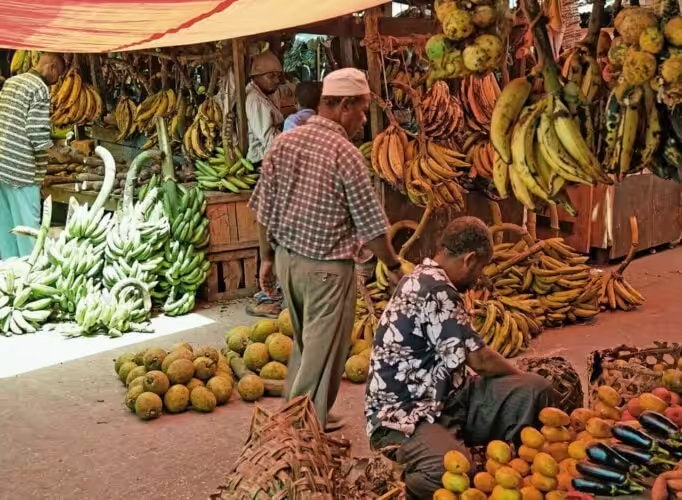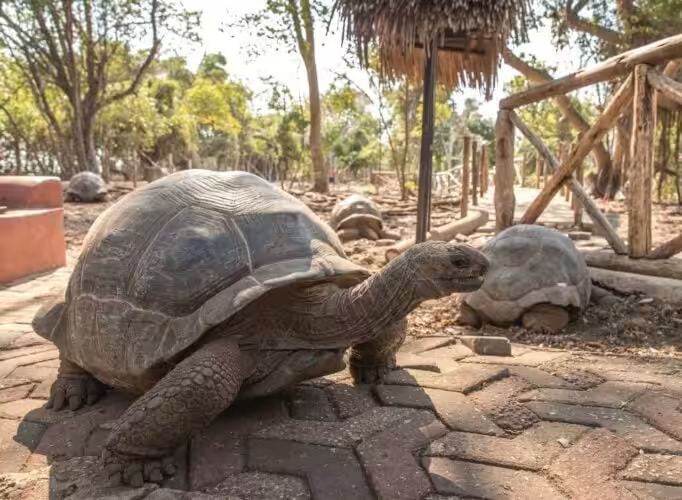
We love Zanzibar’s beaches as much as you do, but if you do just one thing away from the sand, make it Jozani Forest. It’s the island’s only national park and the one place on Earth where Zanzibar red colobus monkeys live in the wild, often just a few metres from the path. Here are a few tips from us to help you make the most of it.
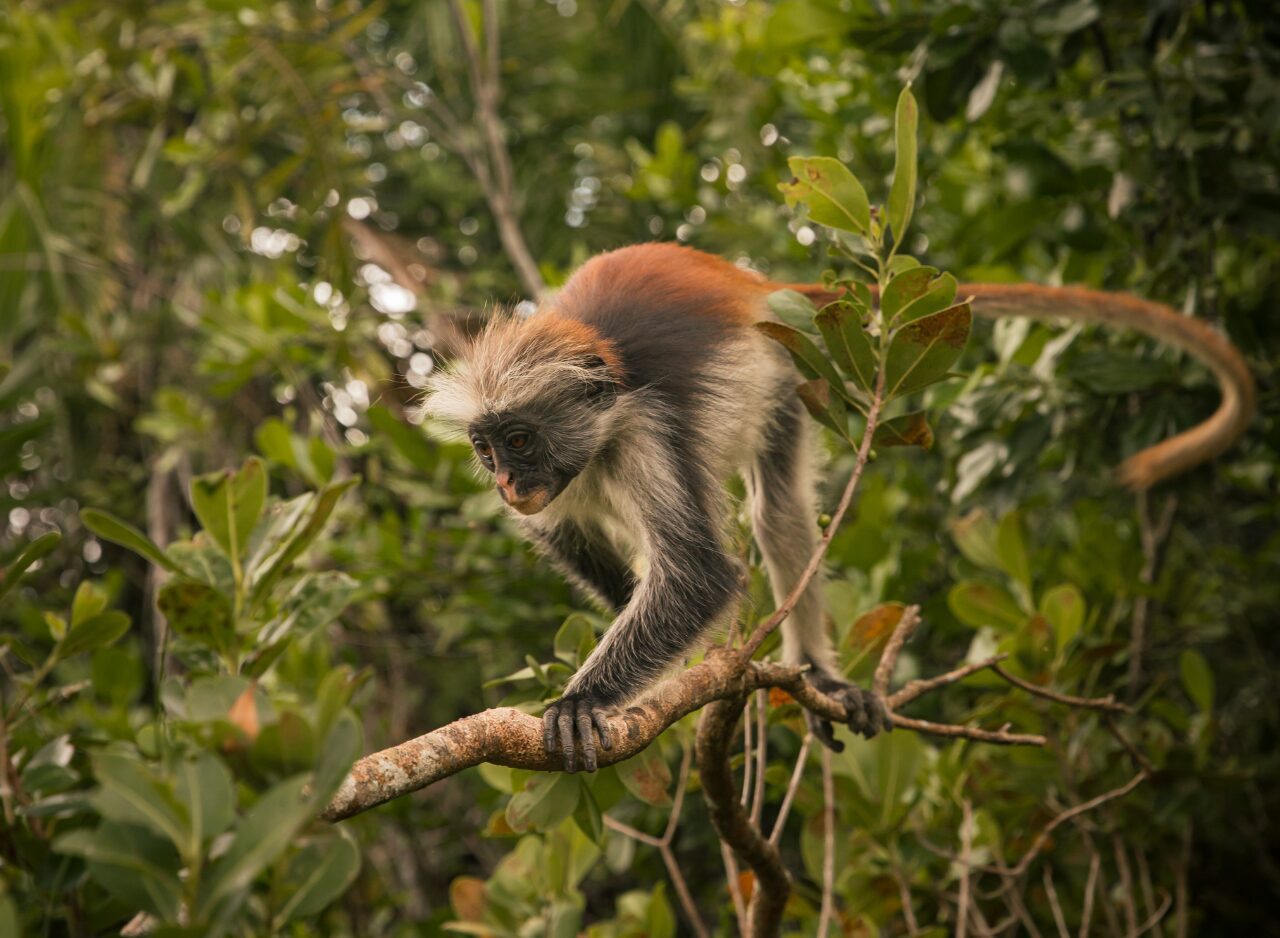
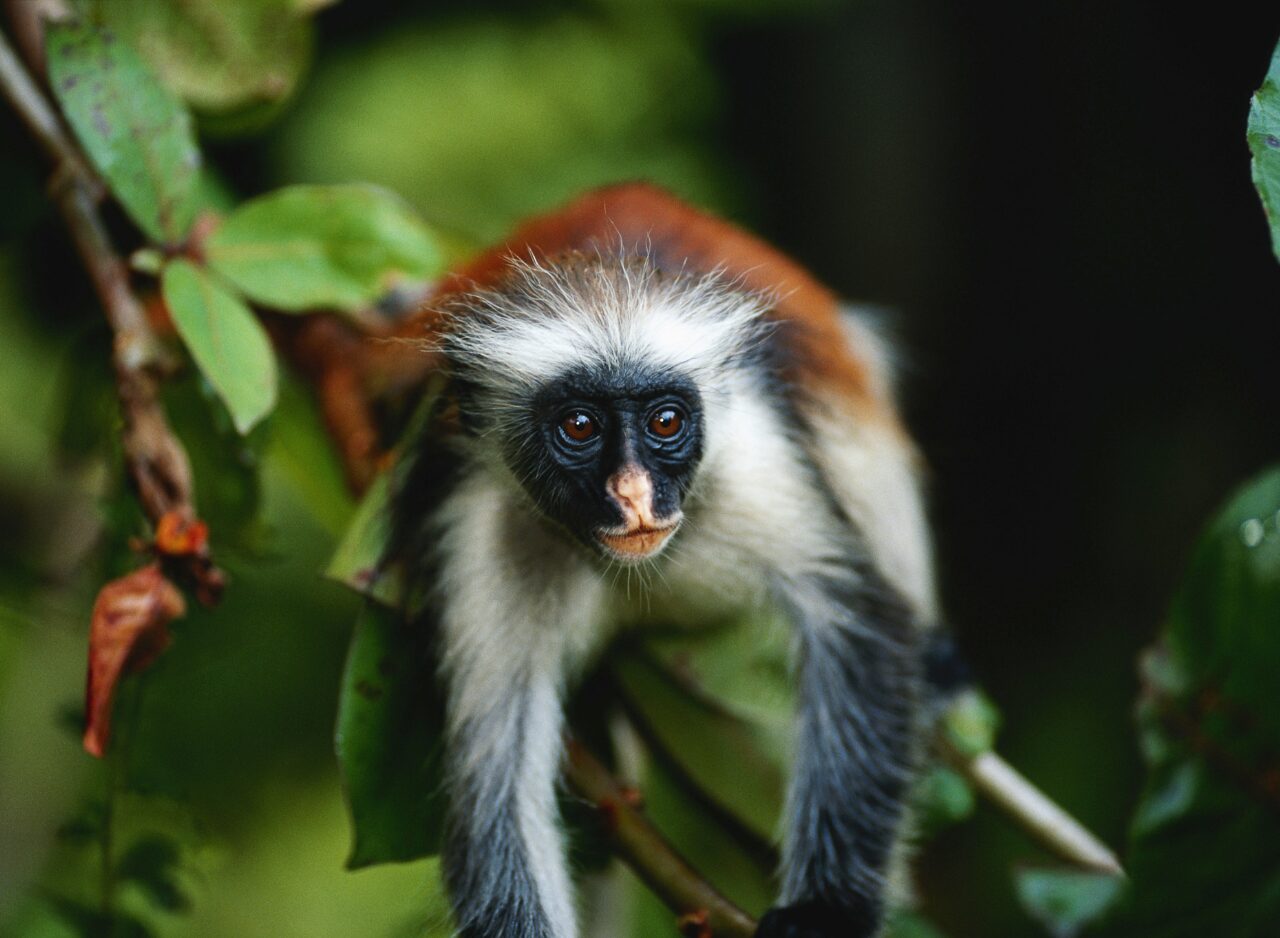
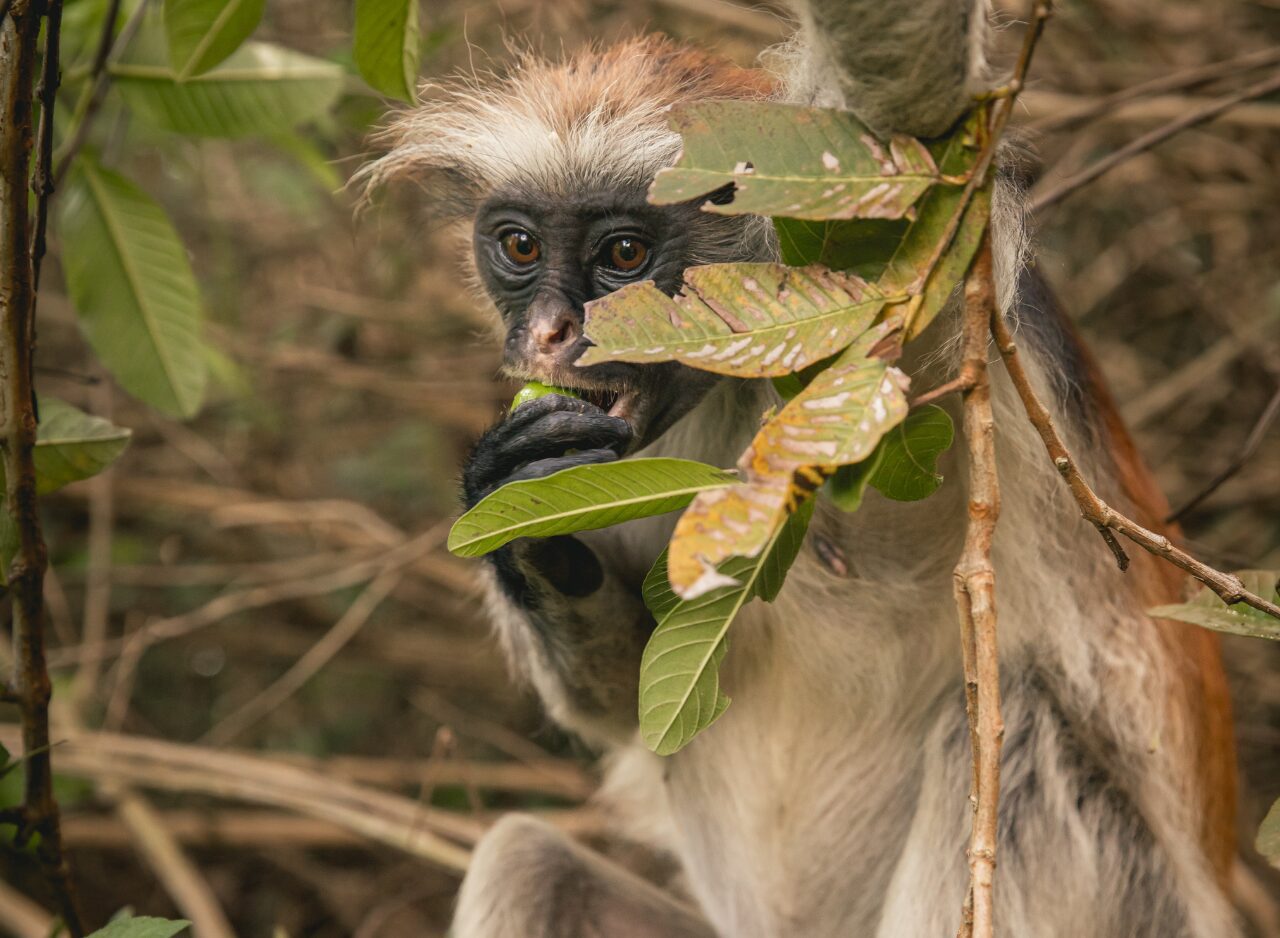
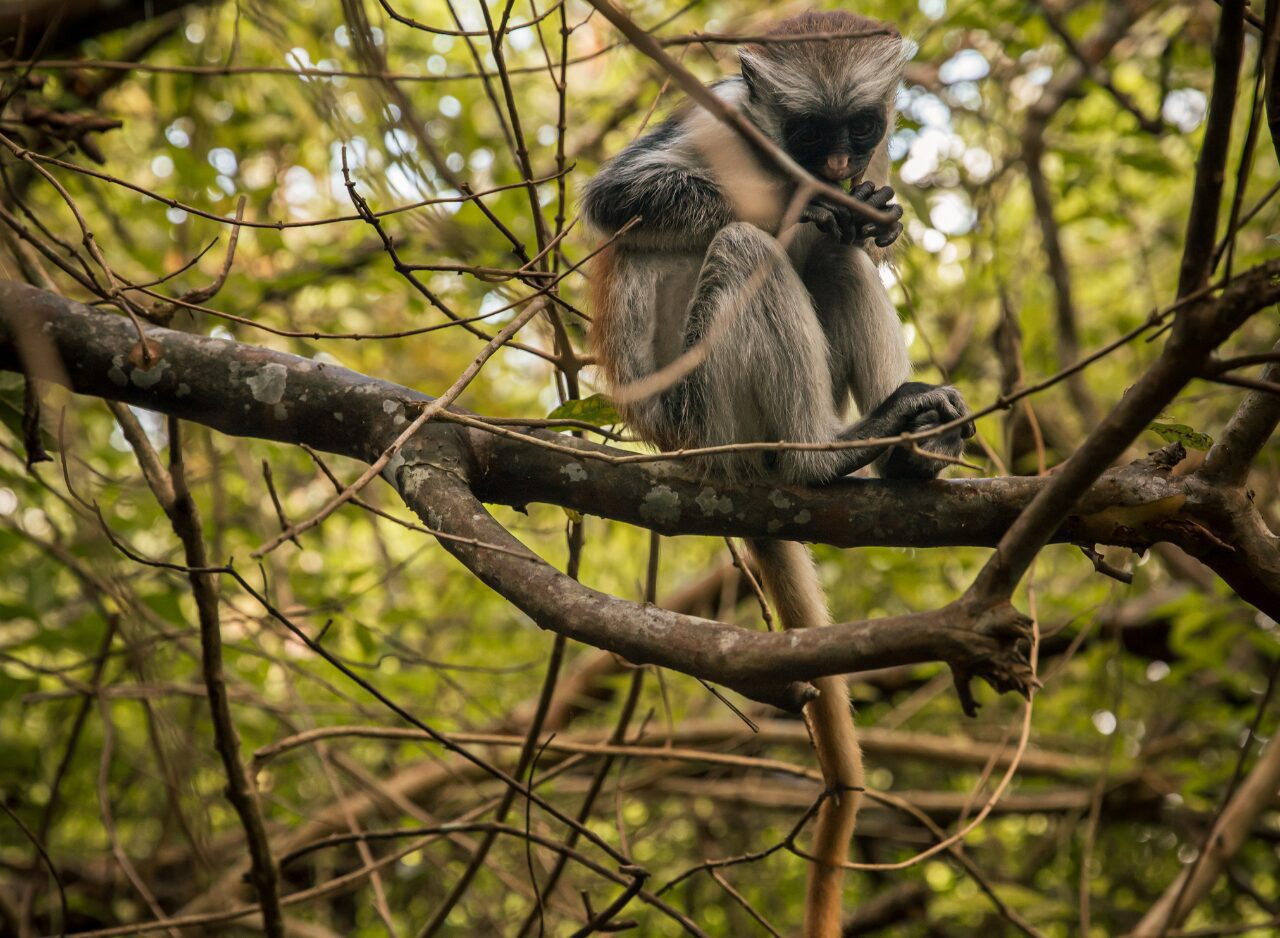
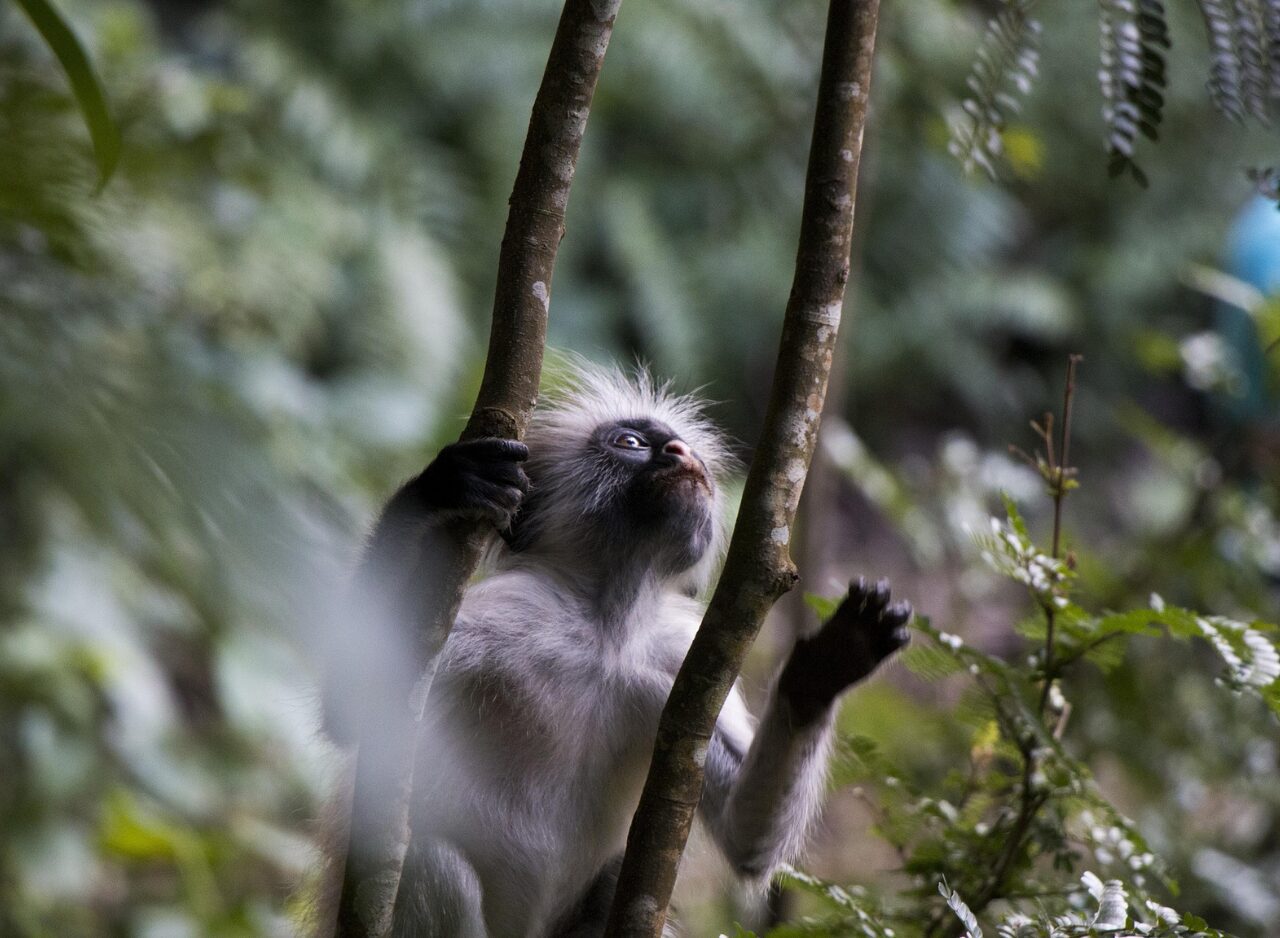
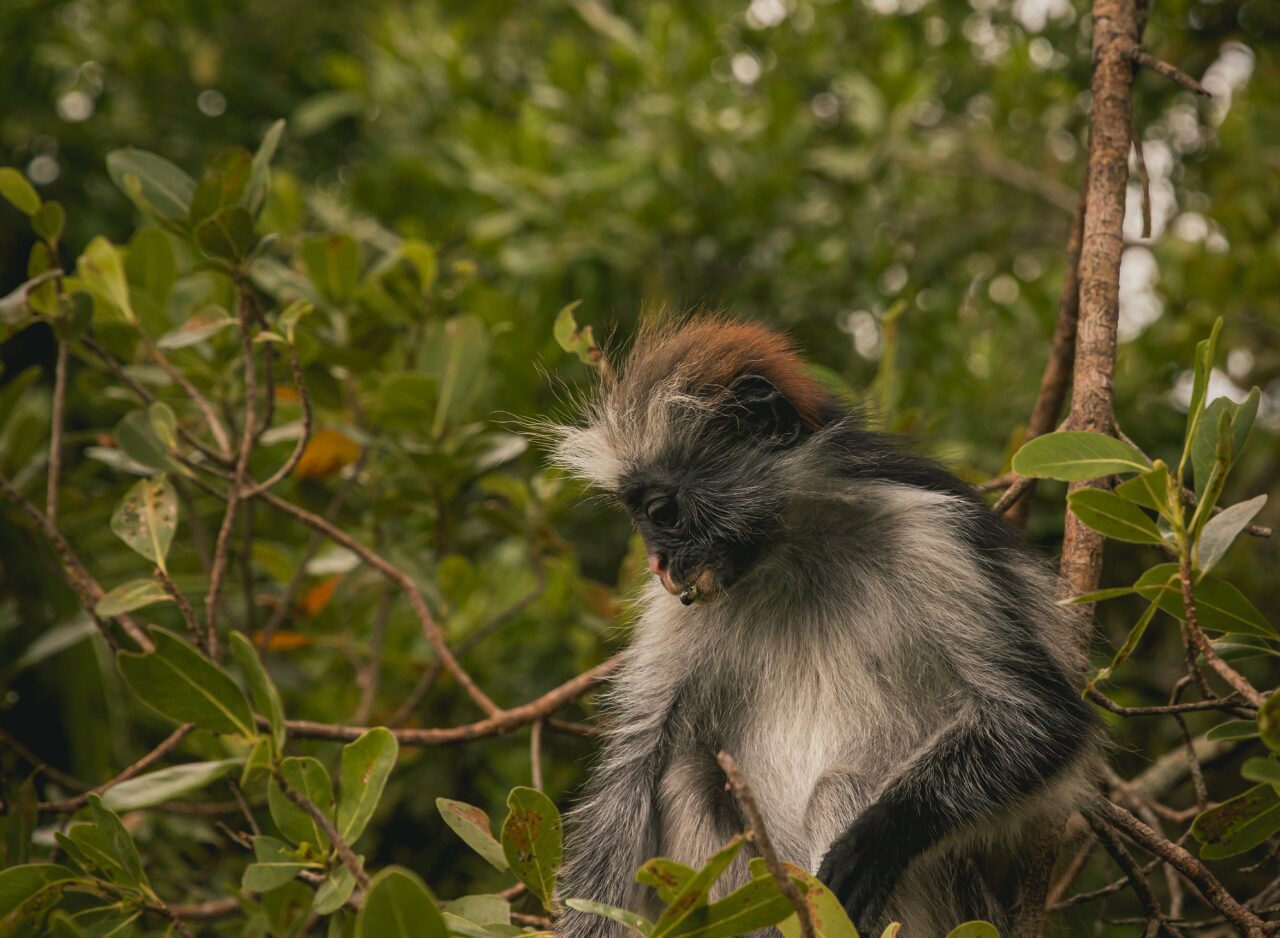
The red colobus is why most people come to Jozani, and one look explains it. Reddish back, black shoulders and a dark face framed by a wild tuft of white fur, like it’s just rolled out of bed. You won’t find this monkey anywhere else in the world.
The monkeys here are used to people. On most mornings you’ll find them feeding, grooming and leaping between branches, sometimes just a couple of metres away, and they’ll happily carry on munching leaves while you take your fiftieth photo. They’re still wild animals, though, so no two visits are quite the same.
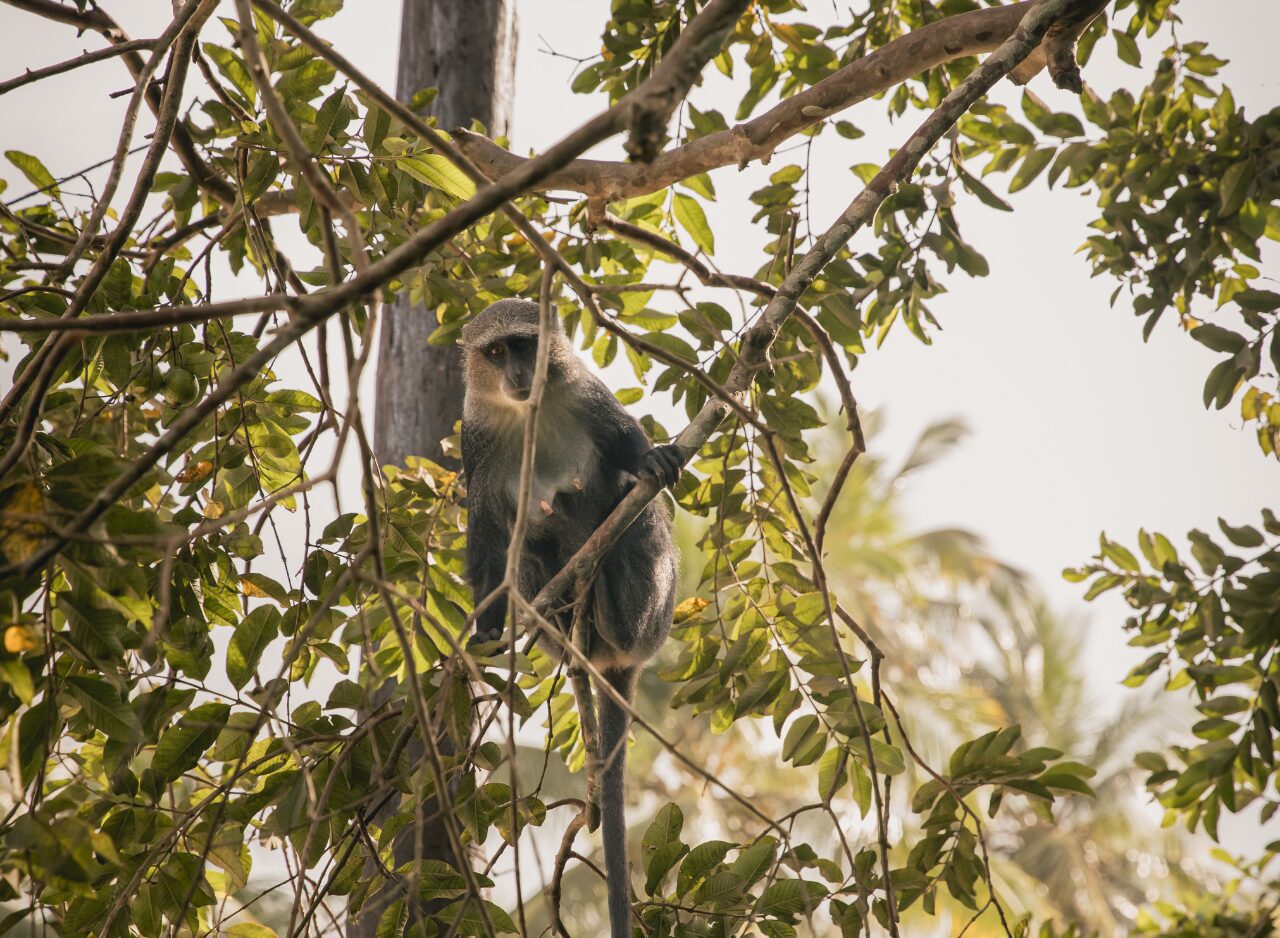
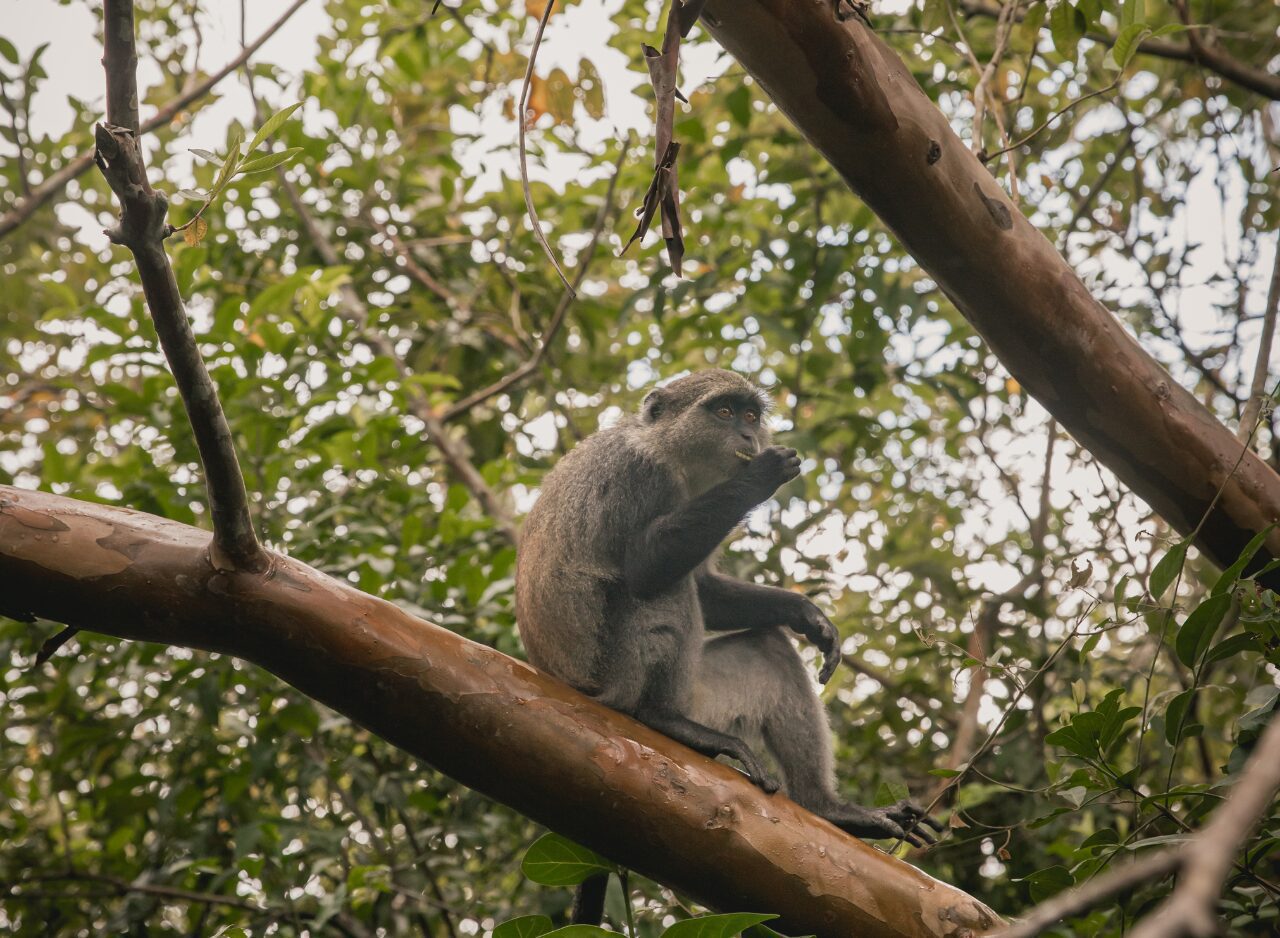
Keep an eye out for the supporting cast, too. The park’s official list includes Sykes’ (blue) monkeys, bush babies, elephant shrews, two tiny antelopes called the suni and Ader’s duiker, and even a frog named after the forest itself, the Kassina Jozani.
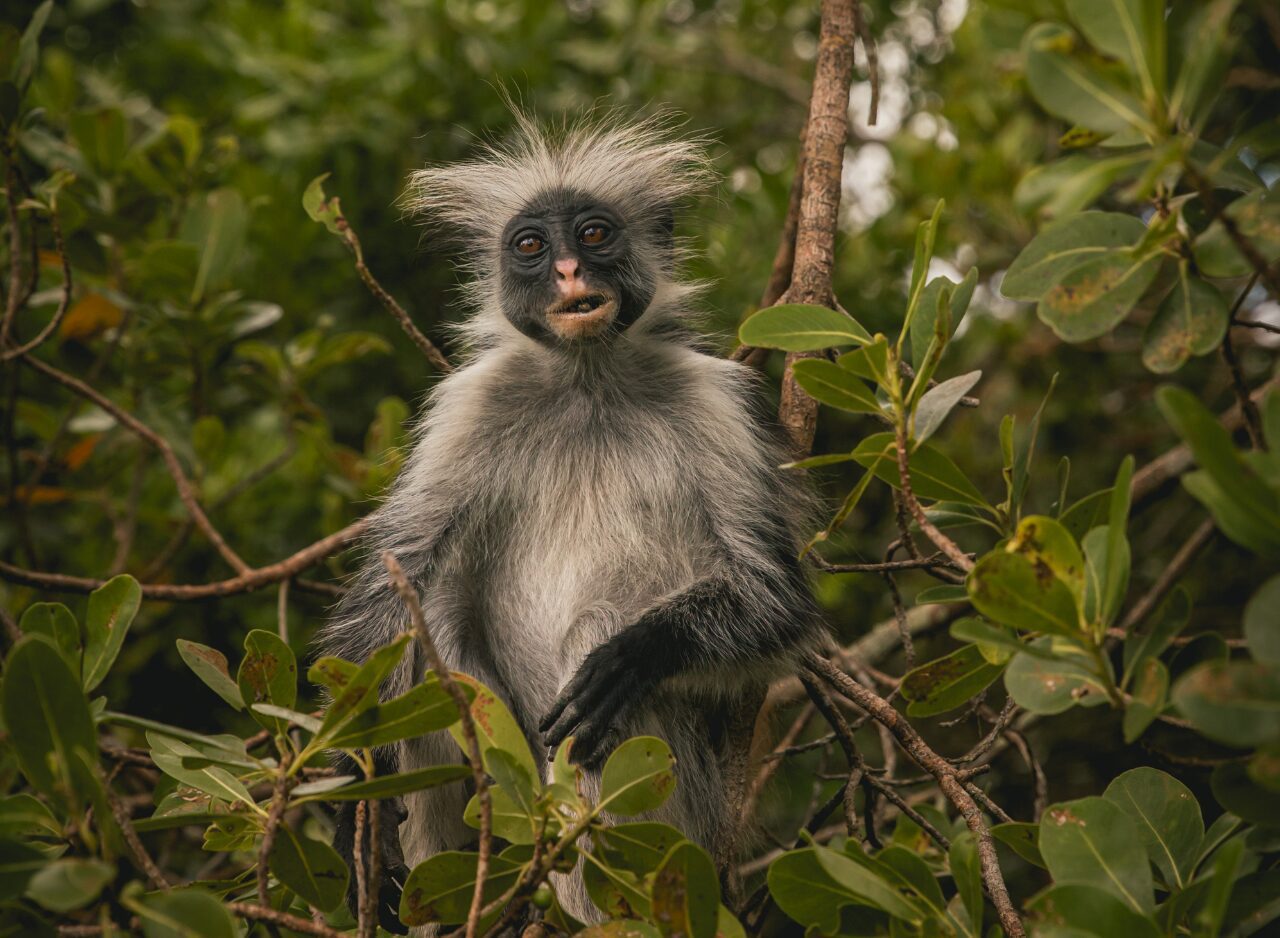
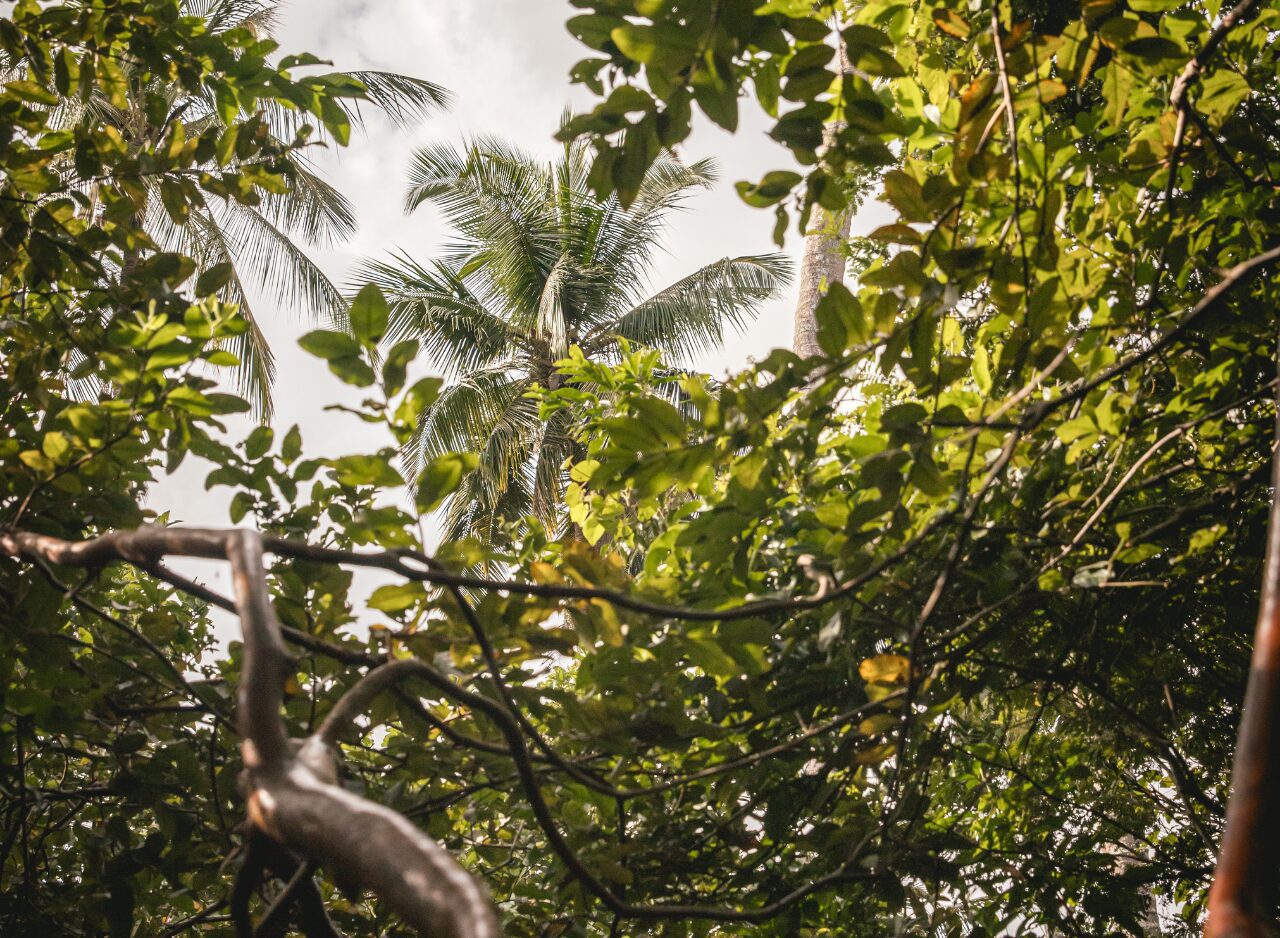
Every visit starts with a walk through the forest alongside an official park guide. This is where Jozani gets interesting beyond the monkeys: your guide will show you plants locals have used as medicine and spices for generations, tall mahogany trees, and red banana trees growing wild. Birdwatchers will be busy, and butterflies are everywhere.
The paths are flat and easy. After rain they get muddy, so keep that in mind when you pick your shoes.
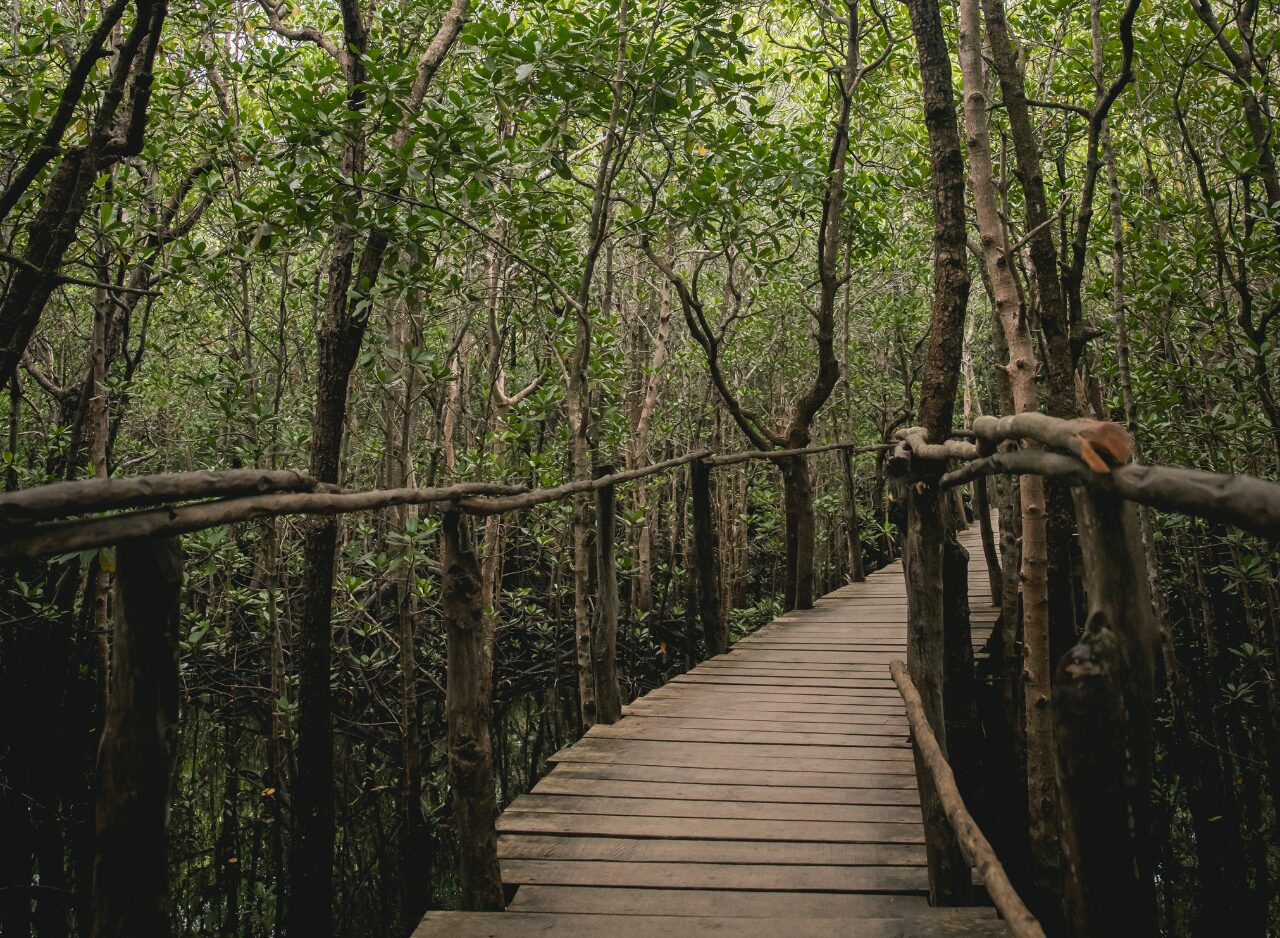
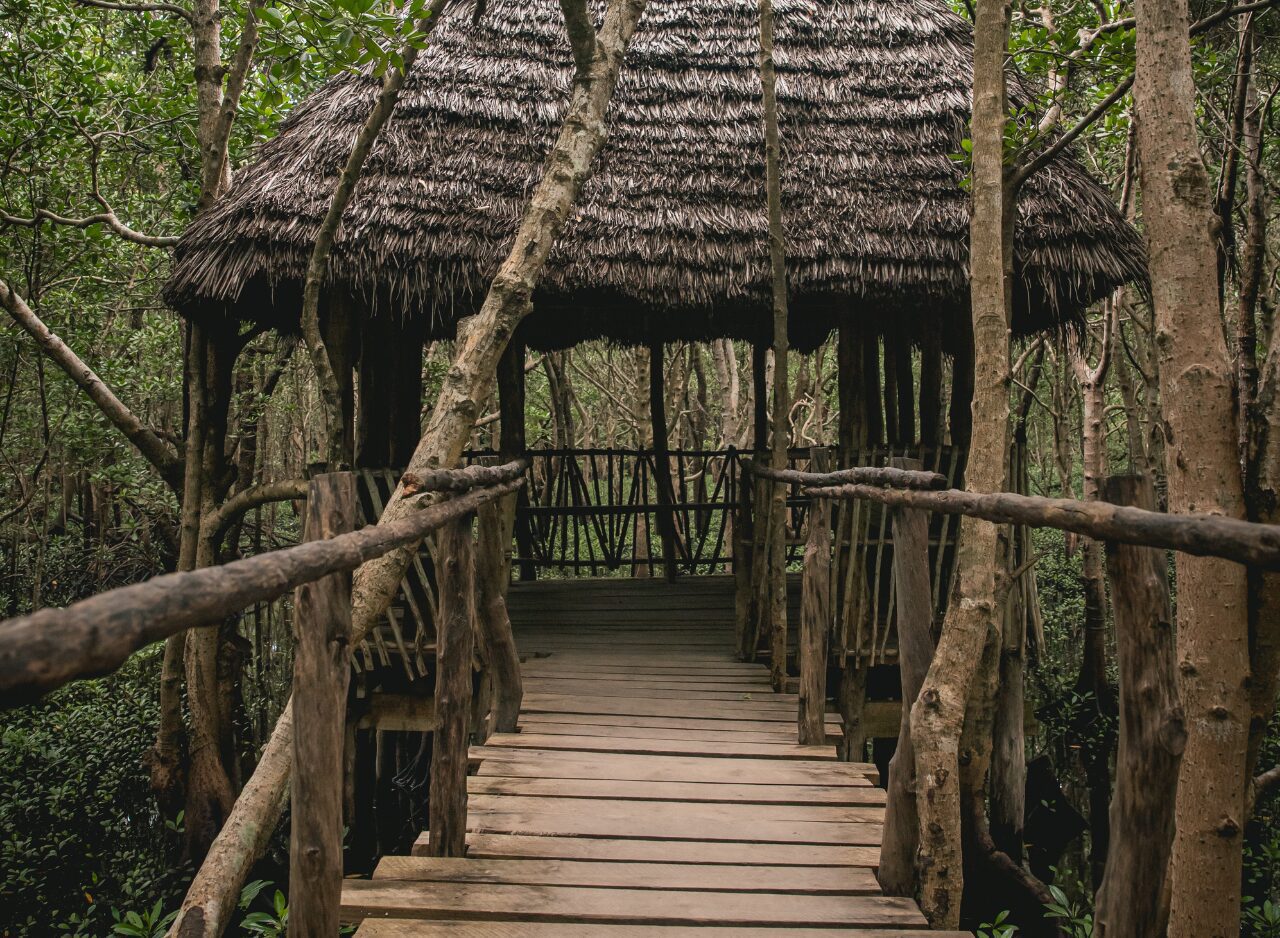
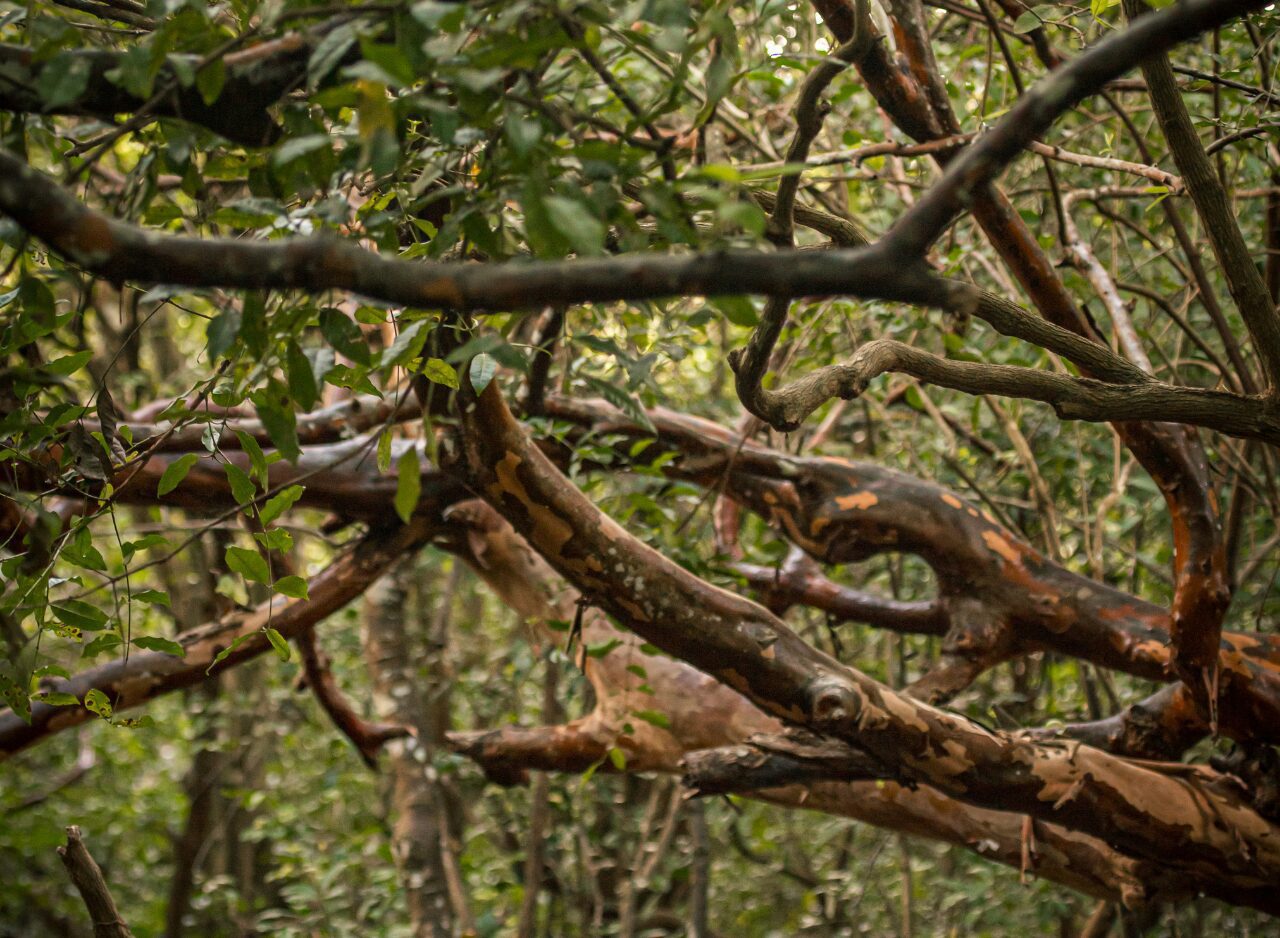
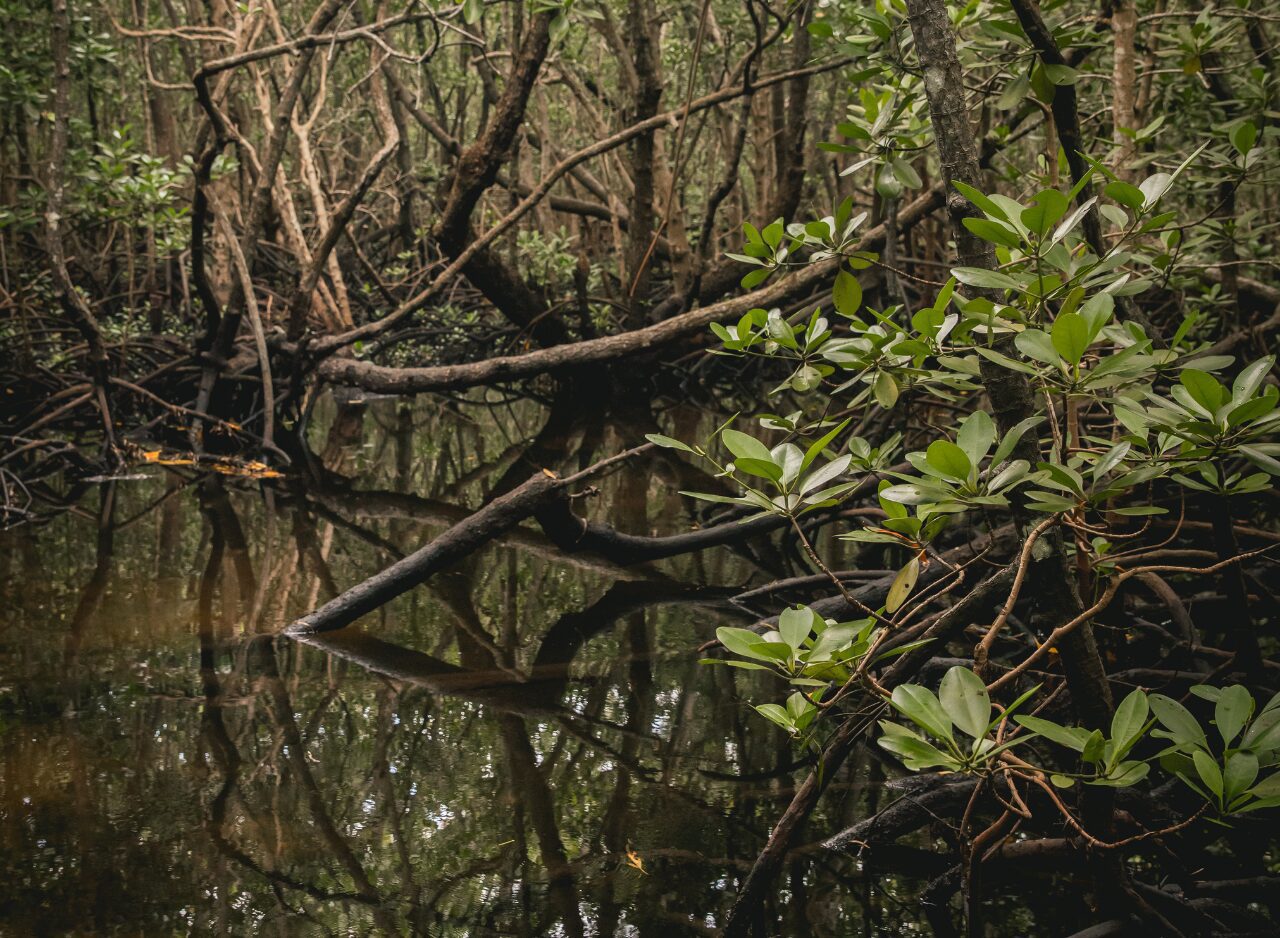
After the monkeys, cross the road to the mangrove boardwalk. It’s a raised wooden path, about 1 km long, that winds through the mangrove swamp and takes 30–45 minutes at an easy pace.
Plenty of visitors skip it and head straight back to the car. Please don’t. It’s included in your ticket, it’s usually quiet, and it’s a completely different world: twisted roots rising out of the water and tiny crabs scuttling across the mud. The mangroves also do a serious job, protecting Zanzibar’s coastline from the sea.
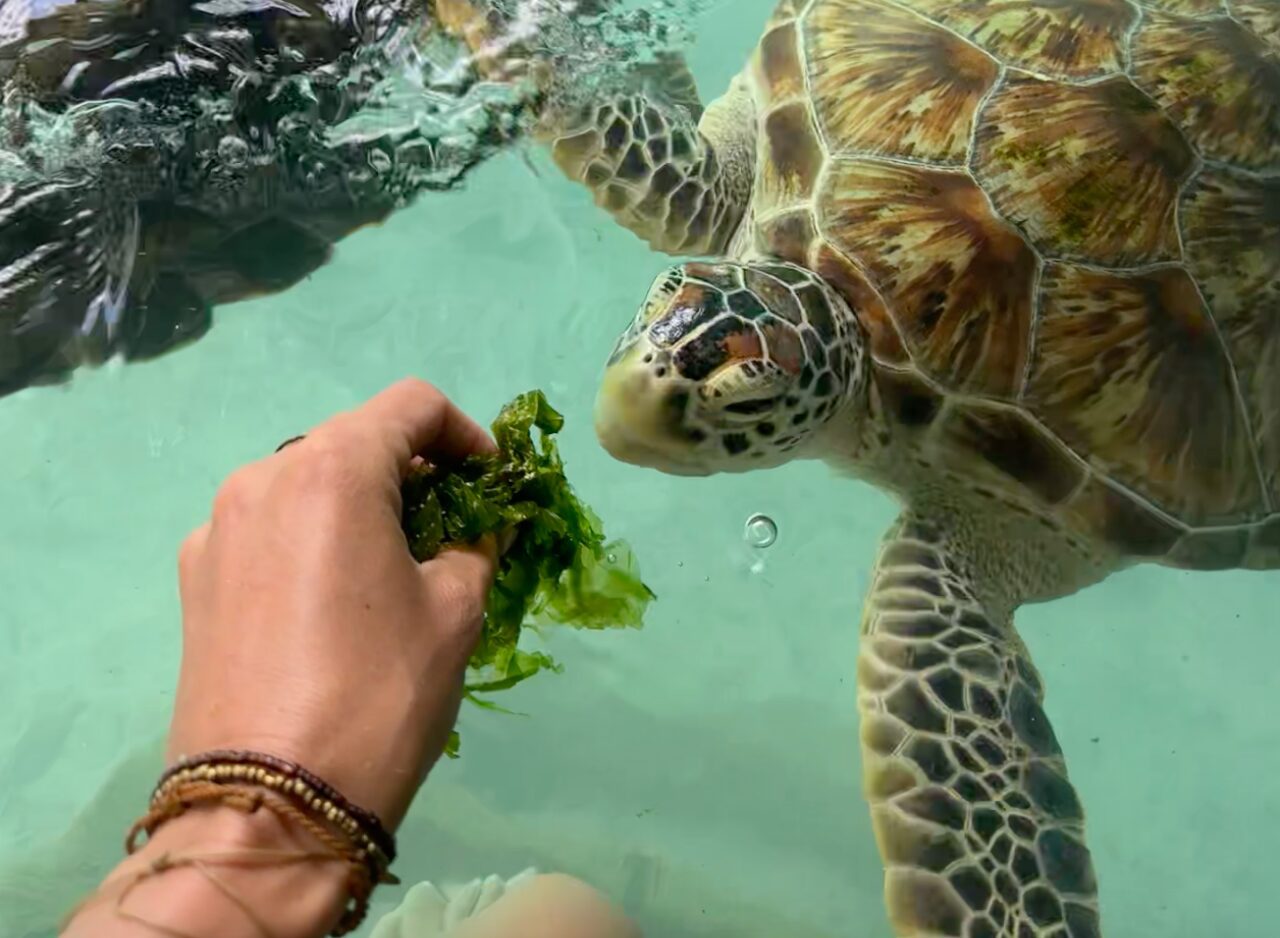
Want the whole day sorted? Our Jozani Forest & Salaam Cave tour picks you up from your hotel, walks you through the forest and the mangroves with a guide, then heads south for 30 minutes in the water with giant sea turtles, followed by lunch. Entrance fees are included.
From $75 per person · Free cancellation up to 24 hours before
The basic ticket costs around 30,000 TZS (roughly US$12) per person and includes an official park guide, who is mandatory. Bring cash, and don't count on paying by card.
This is the simplest option: entry to the forest and the mangrove boardwalk with a park guide, and that’s it. Transport, other stops and food aren’t included, and from the north or east coast Jozani is well over an hour’s drive each way. That’s why tours that add hotel pickup, other stops or lunch are priced differently. On our tour, pickup, entrance fees, the guide, Salaam Cave and lunch are all taken care of.
A few more tips: shillings usually work out cheaper than dollars, you don’t need to hire anyone on the road outside the park, and fees can change, so check the price on arrival. If your guide made your morning, a small tip at the end is always appreciated.
Early. In the morning the monkeys are most active, it's cooler, and you'll beat the tour buses. Jozani is open all year. The long rains usually fall from March to May, with lighter showers around November and December, but Zanzibar weather doesn't always read the calendar: dry days in the rainy season and showers in the dry season are both common. More in our month-by-month guide to Zanzibar weather.
Zanzibar is hot and humid all year, and inside the forest it feels like a greenhouse. Wear light, breathable clothes and closed shoes you don't mind getting muddy (this isn't the day for your new white sneakers). Bring water, a sun hat and a bit of insect repellent, especially if you're in shorts.
Snap away, just switch off the flash. We'd leave the drone at the hotel: the canopy is dense and drones stress the wildlife.
However close the monkeys come, don't feed or touch them. They're wild, and human food makes them sick. Give them space and follow your guide's lead.
There are toilets and a small restaurant at the entrance.
Very much so. Kids tend to love the monkeys, and the paths are easy. It's less suited to babies or anyone with limited mobility, as the forest paths are uneven.
Jozani sits in the south-central part of Unguja, Zanzibar’s main island, just south of Chwaka Bay. It’s right on the main road between Stone Town and the south-east coast, so it’s an easy stop on the way to or from Paje and Jambiani.
| From | Drive time (approx.) |
|---|---|
| Paje / Jambiani | 25 min |
| Kizimkazi | 40 min |
| Stone Town | 1 h 10 min |
| Kiwengwa / Pongwe | 1 h 15 min |
| Nungwi / Kendwa | 1 h 40 min |
Drive times depend on traffic and road conditions.
The easy way. Hotel pickup, entrance fees and a guide are all sorted, and all you need to do is show up with good shoes.
Drive in, buy your ticket at the gate and a guide will be assigned to you. Taxis can wait while you visit.
Local minibuses 309 and 310 run from Stone Town towards Paje and stop at Jozani on request. Cheap and very local, but departures are irregular, so it takes longer.
Jozani takes about half a day, which leaves plenty of time for something else.
This is our tour. About 40 minutes further south, in Kizimkazi, Salaam Cave is home to giant sea turtles. You get a guaranteed 30 minutes in the water with them, and you can feed them seaweed (bring a dollar in cash for it). If the tide is right, there’s time for a swim at the nearby beach before lunch. Can’t get enough of turtles? Read our guide to swimming with turtles in Zanzibar.
With your own car, you can pair Jozani with Stone Town or a spice farm for a full day out. If you’d rather leave the planning to someone else, our Stone Town & Spice Farm tour makes a great second day.
Our Jozani Forest & Salaam Cave tour is rated 4.9/5 by travellers on GetYourGuide. Here’s what a few of them said:
★★★★★
“Seeing so many monkeys running past you was just truly cool. My wife loved everything but the Salaam caves were her favourite.”
Benjamin · United Kingdom
★★★★★
“We had an amazing day at Jozani Forest and Salaam Cave. Everything was well organised and our guide was great. The food was nice too and I’m a fussy eater!”
Lois · United Kingdom
★★★★★
“Amazing experience and very nice guide. We got enough time to see the monkeys and sea turtles. Much recommended.”
Dave · Netherlands
Yes, especially if you need a break from the beach. It’s the only place in the world to see Zanzibar red colobus monkeys in the wild, and a visit is short enough to fit into almost any trip.
Around 2 hours for the forest walk and the mangrove boardwalk, plus your travel time.
Jozani is open every day, from early morning (around 7:30–8:00) until late afternoon. Times can change, so check before you go, and remember that mornings are best for the monkeys.
Yes, a park guide is mandatory, and they’re included in the entrance ticket.
Don’t count on it. Visitors report that the ticket office takes cash, in Tanzanian shillings or US dollars, and shillings usually work out cheaper. If you come with us, entrance fees are already included.
On most days, yes. They live around the trails and are used to people, but they’re wild, so nobody can promise it 100%.
No. Jozani is a forest park, and there are no lions, elephants or giraffes anywhere on Zanzibar. For those, you fly to a national park on the mainland. Our guide to a safari from Zanzibar explains how it works.
Yes, Jozani is open all year. The long rains usually fall from March to May, with lighter showers around November and December. The paths get muddy after rain, so wear shoes you don’t mind getting dirty.
Yes, the walk is easy and kids love the monkeys. Our tour is suitable for children from 4 years.
Get there early, pack a little patience (the monkeys run on their own schedule), and whatever you do, don’t skip the mangroves. If you’d rather leave the planning to us, we’d love to show you around. Drop us a message on WhatsApp with any questions, big or small.